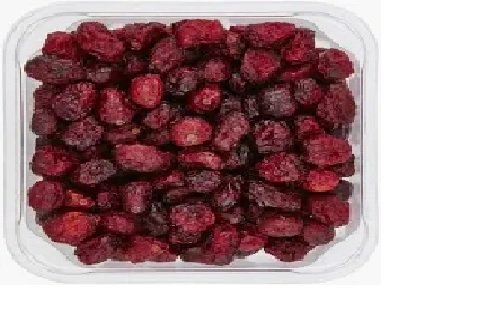







Cranberries are small, round berries that typically measure about 1/2 inch in diameter. They come in various shades of red, from deep crimson to a lighter, almost pinkish hue. The fruit has a tart, slightly bitter taste, which is due to its high acidity and low sugar content.
Cranberries grow on low-lying, evergreen shrubs in boggy or marshy areas. The plants have small, evergreen leaves and produce white or pinkish flowers. The berries are often harvested in the fall, and they float in water, which makes them easier to collect from flooded bogs.
Nutritionally, cranberries are a good source of vitamins C and E, dietary fiber, and antioxidants. They're commonly used in various culinary applications, including cranberry sauce, juices, jams, and baked goods. Due to their tartness, they're often paired with sweeter ingredients to balance their flavor.
Cranberries are small, round berries that typically measure about 1/2 inch in diameter. They come in various shades of red, from deep crimson to a lighter, almost pinkish hue. The fruit has a tart, slightly bitter taste, which is due to its high acidity and low sugar content.
Cranberries grow on low-lying, evergreen shrubs in boggy or marshy areas. The plants have small, evergreen leaves and produce white or pinkish flowers. The berries are often harvested in the fall, and they float in water, which makes them easier to collect from flooded bogs.
Nutritionally, cranberries are a good source of vitamins C and E, dietary fiber, and antioxidants. They're commonly used in various culinary applications, including cranberry sauce, juices, jams, and baked goods. Due to their tartness, they're often paired with sweeter ingredients to balance their flavor.
Cranberries are small, round berries that typically measure about 1/2 inch in diameter. They come in various shades of red, from deep crimson to a lighter, almost pinkish hue. The fruit has a tart, slightly bitter taste, which is due to its high acidity and low sugar content.
Cranberries grow on low-lying, evergreen shrubs in boggy or marshy areas. The plants have small, evergreen leaves and produce white or pinkish flowers. The berries are often harvested in the fall, and they float in water, which makes them easier to collect from flooded bogs.
Nutritionally, cranberries are a good source of vitamins C and E, dietary fiber, and antioxidants. They're commonly used in various culinary applications, including cranberry sauce, juices, jams, and baked goods. Due to their tartness, they're often paired with sweeter ingredients to balance their flavor.
Fresh
3 days return policy

Novarsistech Copyright 2008-26. All rights reserved.