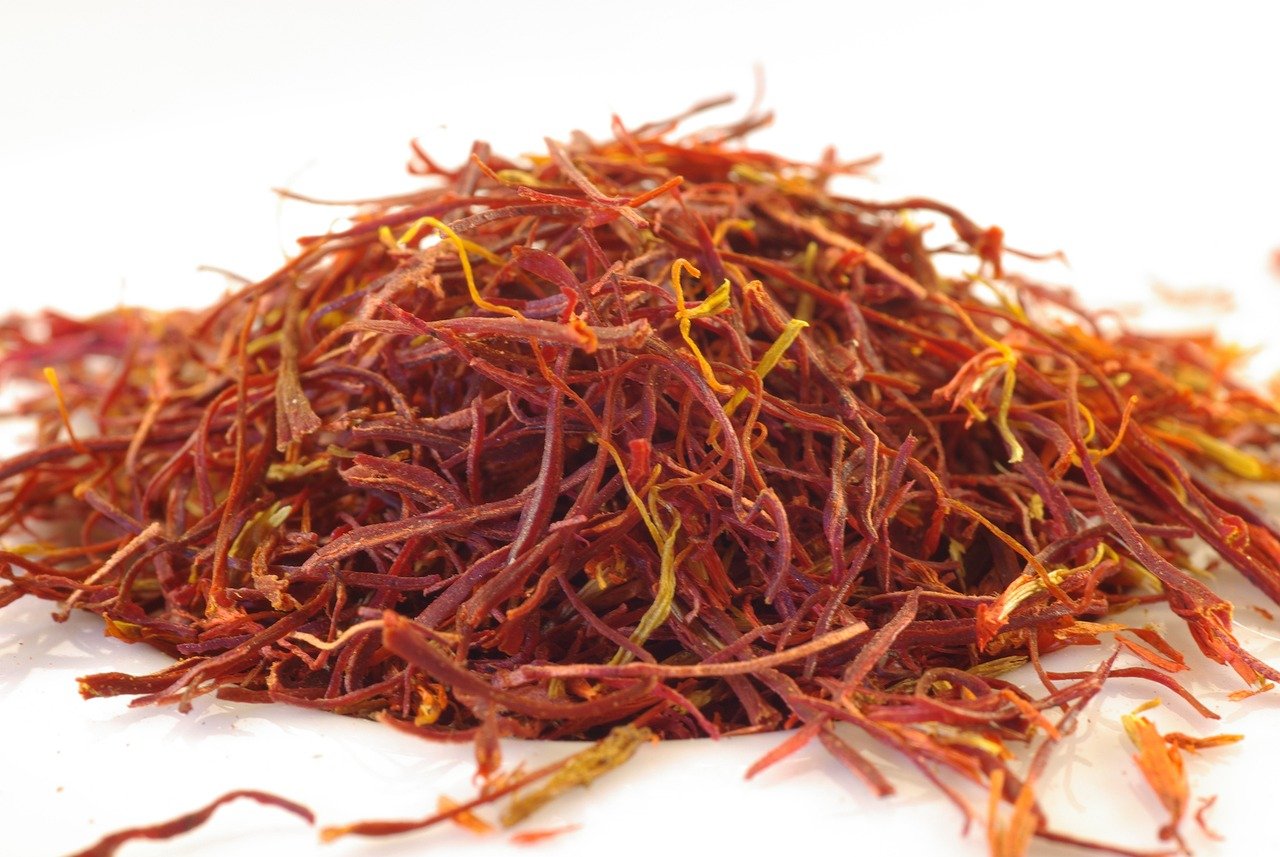







Saffron is one of the most prized and expensive spices in the world, known for its unique flavor, color, and aromatic qualities. Here’s a detailed description:
### **Saffron (Crocus sativus)**
**Appearance:**
- **Stigmas:** Saffron consists of the dried stigmas (the female part) of the crocus flower (*Crocus sativus*). These stigmas are thin, thread-like structures, typically about 2 to 4 cm long, and have a vibrant red to reddish-orange color.
- **Form:** The threads are delicate and slightly curled. Genuine saffron threads are typically whole and unbroken, while powdered saffron is a finely ground version of the threads.
**Flavor and Aroma:**
- **Flavor:** Saffron has a distinctive, subtle, and complex flavor that is often described as floral, slightly sweet, and earthy. It adds a unique depth and richness to dishes.
- **Aroma:** The aroma of saffron is highly aromatic and fragrant, with a floral, honey-like scent that can be quite potent. The fragrance is one of the key reasons saffron is so valued in cooking.
**Culinary Uses:**
- **Coloring:** Saffron is renowned for its ability to impart a beautiful golden-yellow color to dishes. It is often used in rice dishes (like paella and biryani), soups, and sauces.
- **Flavoring:** It is used to flavor a variety of dishes, including desserts (such as saffron ice cream or rice pudding), savory dishes, and beverages (like saffron tea or liqueurs).
- **Infusion:** To use saffron, the threads are typically soaked in a small amount of warm water, milk, or broth to release their color and flavor before being added to recipes.
**Nutritional and Medicinal Benefits:**
- **Nutrients:** Saffron contains vitamins (like vitamin C and B vitamins) and minerals (such as potassium and magnesium), though it is used in such small quantities that its nutritional contributions are minimal.
- **Health Benefits:** Saffron is traditionally used for its potential health benefits, including its antioxidant properties, mood-enhancing effects, and digestive aid. It has been studied for its potential to improve mood, reduce symptoms of depression, and support cognitive function.
**Cultivation:**
- **Climate:** Saffron requires a specific climate to grow, typically thriving in regions with a Mediterranean climate—hot, dry summers and cool winters. It is usually cultivated in countries like Iran, India, Spain, and Morocco.
- **Soil:** The plant prefers well-drained, sandy soil with good sunlight.
- **Harvesting:** Saffron is harvested by hand, with each crocus flower producing only a small amount of saffron. The stigmas are delicately collected and dried. The harvesting process is labor-intensive, contributing to the high cost of saffron.
**Storage:**
- **Whole Threads:** Store whole saffron threads in an airtight container in a cool, dark place to preserve their flavor and color. Properly stored, saffron can last for several years.
- **Powdered Saffron:** Powdered saffron should also be stored in an airtight container and used within 6 to 12 months for optimal flavor and potency.
**Quality and Authenticity:**
- **Quality:** High-quality saffron is characterized by long, vibrant red threads with a strong aroma. It should not have any yellow or white parts, which indicate poor quality.
- **Authenticity:** Due to its high value, saffron is sometimes adulterated or replaced with cheaper substances. Authentic saffron should be purchased from reputable sources to ensure its purity.
Overall, saffron is a luxurious and highly sought-after spice that adds unique flavor, color, and aroma to a wide range of dishes. Its delicate nature and complex characteristics make it a treasured ingredient in many culinary traditions.
Saffron is one of the most prized and expensive spices in the world, known for its unique flavor, color, and aromatic qualities. Here’s a detailed description:
### **Saffron (Crocus sativus)**
**Appearance:**
- **Stigmas:** Saffron consists of the dried stigmas (the female part) of the crocus flower (*Crocus sativus*). These stigmas are thin, thread-like structures, typically about 2 to 4 cm long, and have a vibrant red to reddish-orange color.
- **Form:** The threads are delicate and slightly curled. Genuine saffron threads are typically whole and unbroken, while powdered saffron is a finely ground version of the threads.
**Flavor and Aroma:**
- **Flavor:** Saffron has a distinctive, subtle, and complex flavor that is often described as floral, slightly sweet, and earthy. It adds a unique depth and richness to dishes.
- **Aroma:** The aroma of saffron is highly aromatic and fragrant, with a floral, honey-like scent that can be quite potent. The fragrance is one of the key reasons saffron is so valued in cooking.
**Culinary Uses:**
- **Coloring:** Saffron is renowned for its ability to impart a beautiful golden-yellow color to dishes. It is often used in rice dishes (like paella and biryani), soups, and sauces.
- **Flavoring:** It is used to flavor a variety of dishes, including desserts (such as saffron ice cream or rice pudding), savory dishes, and beverages (like saffron tea or liqueurs).
- **Infusion:** To use saffron, the threads are typically soaked in a small amount of warm water, milk, or broth to release their color and flavor before being added to recipes.
**Nutritional and Medicinal Benefits:**
- **Nutrients:** Saffron contains vitamins (like vitamin C and B vitamins) and minerals (such as potassium and magnesium), though it is used in such small quantities that its nutritional contributions are minimal.
- **Health Benefits:** Saffron is traditionally used for its potential health benefits, including its antioxidant properties, mood-enhancing effects, and digestive aid. It has been studied for its potential to improve mood, reduce symptoms of depression, and support cognitive function.
**Cultivation:**
- **Climate:** Saffron requires a specific climate to grow, typically thriving in regions with a Mediterranean climate—hot, dry summers and cool winters. It is usually cultivated in countries like Iran, India, Spain, and Morocco.
- **Soil:** The plant prefers well-drained, sandy soil with good sunlight.
- **Harvesting:** Saffron is harvested by hand, with each crocus flower producing only a small amount of saffron. The stigmas are delicately collected and dried. The harvesting process is labor-intensive, contributing to the high cost of saffron.
**Storage:**
- **Whole Threads:** Store whole saffron threads in an airtight container in a cool, dark place to preserve their flavor and color. Properly stored, saffron can last for several years.
- **Powdered Saffron:** Powdered saffron should also be stored in an airtight container and used within 6 to 12 months for optimal flavor and potency.
**Quality and Authenticity:**
- **Quality:** High-quality saffron is characterized by long, vibrant red threads with a strong aroma. It should not have any yellow or white parts, which indicate poor quality.
- **Authenticity:** Due to its high value, saffron is sometimes adulterated or replaced with cheaper substances. Authentic saffron should be purchased from reputable sources to ensure its purity.
Overall, saffron is a luxurious and highly sought-after spice that adds unique flavor, color, and aroma to a wide range of dishes. Its delicate nature and complex characteristics make it a treasured ingredient in many culinary traditions.
Saffron is one of the most prized and expensive spices in the world, known for its unique flavor, color, and aromatic qualities. Here’s a detailed description:
### **Saffron (Crocus sativus)**
**Appearance:**
- **Stigmas:** Saffron consists of the dried stigmas (the female part) of the crocus flower (*Crocus sativus*). These stigmas are thin, thread-like structures, typically about 2 to 4 cm long, and have a vibrant red to reddish-orange color.
- **Form:** The threads are delicate and slightly curled. Genuine saffron threads are typically whole and unbroken, while powdered saffron is a finely ground version of the threads.
**Flavor and Aroma:**
- **Flavor:** Saffron has a distinctive, subtle, and complex flavor that is often described as floral, slightly sweet, and earthy. It adds a unique depth and richness to dishes.
- **Aroma:** The aroma of saffron is highly aromatic and fragrant, with a floral, honey-like scent that can be quite potent. The fragrance is one of the key reasons saffron is so valued in cooking.
**Culinary Uses:**
- **Coloring:** Saffron is renowned for its ability to impart a beautiful golden-yellow color to dishes. It is often used in rice dishes (like paella and biryani), soups, and sauces.
- **Flavoring:** It is used to flavor a variety of dishes, including desserts (such as saffron ice cream or rice pudding), savory dishes, and beverages (like saffron tea or liqueurs).
- **Infusion:** To use saffron, the threads are typically soaked in a small amount of warm water, milk, or broth to release their color and flavor before being added to recipes.
**Nutritional and Medicinal Benefits:**
- **Nutrients:** Saffron contains vitamins (like vitamin C and B vitamins) and minerals (such as potassium and magnesium), though it is used in such small quantities that its nutritional contributions are minimal.
- **Health Benefits:** Saffron is traditionally used for its potential health benefits, including its antioxidant properties, mood-enhancing effects, and digestive aid. It has been studied for its potential to improve mood, reduce symptoms of depression, and support cognitive function.
**Cultivation:**
- **Climate:** Saffron requires a specific climate to grow, typically thriving in regions with a Mediterranean climate—hot, dry summers and cool winters. It is usually cultivated in countries like Iran, India, Spain, and Morocco.
- **Soil:** The plant prefers well-drained, sandy soil with good sunlight.
- **Harvesting:** Saffron is harvested by hand, with each crocus flower producing only a small amount of saffron. The stigmas are delicately collected and dried. The harvesting process is labor-intensive, contributing to the high cost of saffron.
**Storage:**
- **Whole Threads:** Store whole saffron threads in an airtight container in a cool, dark place to preserve their flavor and color. Properly stored, saffron can last for several years.
- **Powdered Saffron:** Powdered saffron should also be stored in an airtight container and used within 6 to 12 months for optimal flavor and potency.
**Quality and Authenticity:**
- **Quality:** High-quality saffron is characterized by long, vibrant red threads with a strong aroma. It should not have any yellow or white parts, which indicate poor quality.
- **Authenticity:** Due to its high value, saffron is sometimes adulterated or replaced with cheaper substances. Authentic saffron should be purchased from reputable sources to ensure its purity.
Overall, saffron is a luxurious and highly sought-after spice that adds unique flavor, color, and aroma to a wide range of dishes. Its delicate nature and complex characteristics make it a treasured ingredient in many culinary traditions.
FRESH
3 DAY

Novarsistech Copyright 2008-26. All rights reserved.